Ideas and guides for your classroom
Step-by-step guides, ready templates and tips — always with print-ready material.

1st Grade Sight Words: Full List and How to Teach Them
The 1st grade sight words list (41 Dolch words plus high-frequency Fry words), which ones are decodable, a weekly teaching routine and 10 quick practice games.
504 Plan vs IEP for ADHD: Which One Fits and What Each Includes
504 plan vs IEP for ADHD: how eligibility works under Section 504 and IDEA, what each plan includes, typical supports and how school teams decide which fits.

The 5E Lesson Plan Model: Template and a K–5 Science Example
The 5E lesson plan model explained: Engage, Explore, Explain, Elaborate, Evaluate, plus a fill-in template and a 2nd grade heating and cooling example.
Accommodations for Anxiety in the Classroom (and During State Tests)
Accommodations for anxiety in class and on state tests: predictable routines, breaks, seating, testing supports and what the IEP or 504 team decides.
ADHD Strategies for Teachers: Instruction, Transitions and Task Initiation
ADHD strategies for teachers: how to plan instruction, run smooth transitions and help students start and finish tasks, with scripts and a weekly routine.

How to Use AI for Lesson Planning: 15 Prompts and a Quality Checklist
15 copy-ready AI prompts for lesson planning (objectives, hooks, differentiation, checks for understanding) plus a checklist to review every AI draft.
50 Attention Getters for the Classroom (Call-and-Response for K–5)
50 attention getters for the classroom: call-and-response chants for K–2 and 3–5, quiet signals, seasonal options and how to teach one so it actually works.

Autism Strategies in the Classroom: 30 Teaching Strategies for Gen Ed and SPED
30 autism strategies for the classroom: how to teach routines, communication, social skills, academics and regulation in gen ed and special education settings.
Visual Schedules for Autism: How to Make and Use One in the Classroom
How to make a visual schedule for students with autism: object, picture or written types, step-by-step setup, first-then boards and fading support.

Behavior Chart Alternatives: 12 Positive Classroom Systems That Work
12 behavior chart alternatives for elementary classrooms: why clip charts backfire, what to use instead and how to switch mid-year.
Behavior Report Card Comments: Positive, Needs Improvement and Next Steps
75 behavior report card comments for elementary: positive comments, needs-improvement wording that stays respectful, and next steps families can support.
Black History Month Activities for Elementary Students (K–5 Ideas)
Black History Month activities for K–5: a four-week plan, biography research, read-aloud ideas, writing prompts and tips to go beyond the same three names.
Brain Breaks for the Classroom: 40 Quick Ideas by Grade (No Videos Needed)
40 brain breaks for the classroom that need no videos or screens: movement, calming, thinking and partner breaks for K–2 and 3–5, plus how to end them fast.

Christmas Activities for School: K–5 Classroom Ideas (with Inclusive Alternatives)
Christmas activities for school that still teach: K–5 reading, writing, math and STEM ideas, plus inclusive winter options for classes that don't celebrate.
Classroom Jobs List: 40 Jobs for Elementary Students (and How to Rotate Them)
40 classroom jobs for K–5 with what each student does, how many jobs you need, 4 rotation systems and how to teach jobs so they save you time.
Classroom Procedures List: 30 Routines to Teach (and Reteach After Break)
A classroom procedures list with 30 routines for elementary: arrival, transitions, materials, getting help and dismissal, plus how to teach and reteach them.
Classroom Rules for Elementary Students: Examples, Wording and a January Reset
Classroom rules for elementary students: how many to have, positive wording, examples for K–2 and 3–5, how to teach them and a step-by-step January reset.
The 6 Co-Teaching Models in Special Education (with Examples and When to Use Each)
The six co-teaching models (observe, assist, station, parallel, alternative and team teaching) with classroom examples, when to use each and co-planning tips.
Common Core ELA Standards by Grade (K–5), Explained in Plain English
What the Common Core ELA standards ask for in each grade from kindergarten to 5th: reading, writing, speaking and language, with plain-English examples.
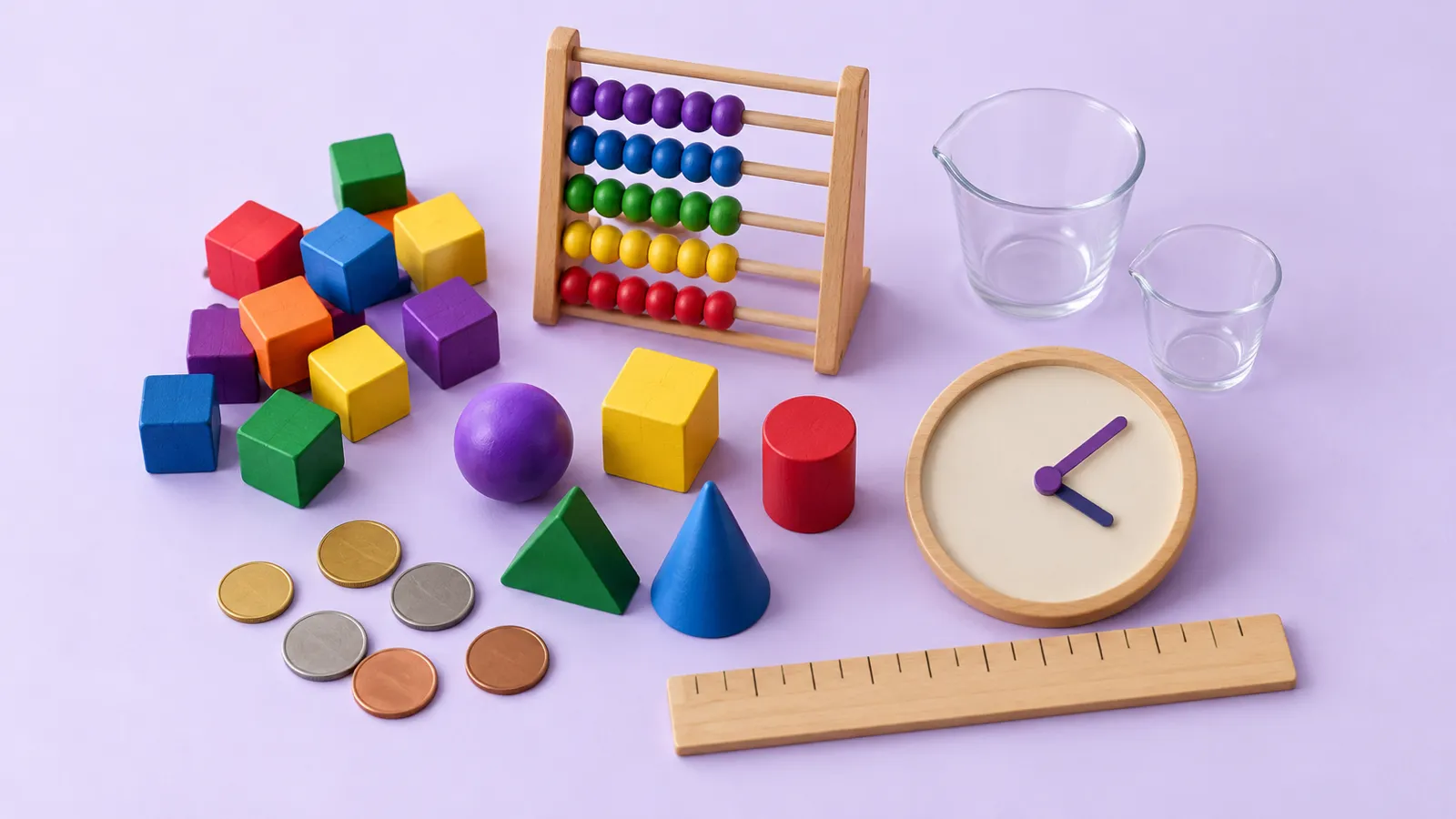
3rd Grade Common Core Math Standards Explained (3.OA, 3.NF, 3.MD) with Examples
The 3rd grade Common Core math standards in plain English: 3.OA, 3.NBT, 3.NF, 3.MD and 3.G, with example tasks, the major work of the year and pacing tips.
Common Core Reading Curriculum: What an Aligned Reading Program Must Include (Checklist)
What a Common Core-aligned reading curriculum must include: complex texts, foundational skills, evidence-based questions, knowledge-building units and writing.
Compare and Contrast Graphic Organizers: Venn, T-Chart and Double Bubble
Compare and contrast graphic organizers for K–5: Venn diagram, T-chart, double bubble map and comparison matrix, with filled-in examples and when to use each.

Differentiated Lesson Plan Example: Tiered by Readiness, Interest and Product
A complete differentiated lesson plan example for 3rd grade area: one goal, a pre-check, three readiness tiers, interest and product choices, and a template.
Division Anchor Charts: Vocabulary, Strategies and Long Division (3rd–5th)
Division anchor charts for 3rd–5th grade: vocabulary, equal groups vs sharing, fact families, remainders, partial quotients, area models and long division.
Dyscalculia Accommodations: A Classroom List for K–5 Teachers
Dyscalculia accommodations for class, homework and tests, signs to watch for by grade, teaching strategies and how IEP and 504 plans fit in.
Earth Day Activities for Students: K–5 Lessons, Not Just Crafts
Earth Day 2027 is Thursday, April 22. Try these K–5 lessons: waste audits, plant investigations, water use data, habitat studies and persuasive writing.
ELL Activities for Elementary: 25 Low-Prep Language Games and Routines
25 low-prep ELL activities for elementary: speaking, listening, vocabulary, reading and writing games and daily routines that build English in any classroom.
ELL vs ESL: What's the Difference? (And Other Terms Teachers Hear)
ELL vs ESL explained: ELL describes the student, ESL describes the program. Plus EL, ML, ENL, ESOL and EB, what each means and how to support learners in class.
End of Year Activities for Elementary: Ideas for the Last 2 Weeks of School
End of year activities for elementary: a 10-day plan for the last two weeks with memory books, review games, letters to next year's class and calm routines.

End of Year Report Card Comments: K–5 Examples for the Final Report
End of year report card comments for K–5: a 4-part formula, examples by grade and subject, growth phrases and summer ideas for the final report.
Exit Ticket Examples: 50 Prompts for Every Subject (K–5)
50 exit ticket examples for math, reading, writing, science and SEL, plus 8 formats, how to sort responses in 3 minutes and how to use the data the next day.
Formative Assessment Examples for Elementary: 25 Quick Checks Beyond Exit Tickets
25 formative assessment examples for elementary: whiteboards, hinge questions, observation checklists and quick writes, plus how to act on the results.
Fraction Activities for 3rd Grade: Hands-On, Number Line and Equivalent Fractions
Fraction activities for 3rd grade: paper folding, fraction strips, human number lines, equivalent fraction matching and comparing games, in teaching order.
Fractions Anchor Charts for 2nd–5th Grade: What to Put on Each One
What to put on fractions anchor charts in 2nd–5th grade: vocabulary, equal parts, number lines, equivalent fractions, comparing, and operations with fractions.
Gingerbread Man Activities for Kindergarten and 1st Grade (Literacy, Math, STEM)
Gingerbread Man activities for kindergarten and 1st grade: story retelling, comparing versions, phonics, counting and measurement, plus STEM challenges.
Graphic Organizers for Writing: Paragraph, Narrative, Opinion and Informational (K–5)
Which graphic organizer to use for each kind of writing in K–5 (paragraph, narrative, opinion, informational), how to teach it and how to fade it out.
Groundhog Day Activities for Elementary Students (Feb 2)
Groundhog Day activities for K–5 that teach real skills: shadow science, prediction graphs, opinion writing and reading, plus a one-day plan for Feb 2, 2027.
Hour of Code Activities for Elementary Students (Unplugged and Online)
Hour of Code activities for K–5 during CS Education Week (Dec 7–13, 2026): unplugged games, block coding ideas and a simple AI lesson, by grade band.
How to Align Lessons to Standards: Unpack a Standard in 4 Steps
How to write standards-aligned lessons: unpack the standard, write a matching target, design the assessment first, then plan activities. Two examples.
How to Read and Cite Common Core Standard Codes (RL.3.1, 4.NF.2) in Lesson Plans and APA
What each part of a Common Core code like RL.3.1 or 4.NF.A.2 means, how to write codes in lesson plans, and how to cite the standards in APA 7.
How to Make a Rubric Step by Step (with an Elementary Example)
How to make a rubric in 6 steps: pick criteria, set levels, write clear descriptors and test it, plus a finished 3rd grade example and rubric types.
IEP Goals for ADHD: Attention, Impulsivity and Work Completion Examples
Measurable IEP goal examples for students with ADHD: sustained attention, impulse control, task initiation and work completion, with baselines and data ideas.

Preschool IEP Goals: Social, Communication, Adaptive and Pre-Academic Examples
Measurable preschool IEP goal examples for ages 3–5: social, play, communication, adaptive, fine motor and pre-academic skills, written around daily routines.
IEP Goals for Sight Words: 15 Examples and How to Measure Them
15 measurable IEP goal examples for sight words and high-frequency words (K–5), how to write the baseline, how to measure progress and common mistakes to avoid.
Functional IEP Goals for Students with Severe and Profound Disabilities
Functional IEP goals for students with severe and profound disabilities: communication, self-care, functional academics, motor and community examples.
IEP Meeting Checklist for Teachers: Before, During and After
An IEP meeting checklist for general and special education teachers: what to prepare, what to bring, what to say during the meeting and what to do afterward.
Kindergarten Assessment Checklist: Skills to Check at the Beginning, Middle and Close of the Year
A kindergarten assessment checklist for beginning, middle and end of year: literacy, math, fine motor and work habits, with how to assess each skill one-on-one.
Kindergarten IEP Goals: Reading, Math, Writing and Behavior Examples
Kindergarten IEP goals with measurable examples for reading, math, writing, behavior and communication, plus how to set baselines and track progress in K.
Kindergarten Lesson Plan Template (with a Filled-In Example)
A kindergarten lesson plan template with 9 sections, a filled-in math example, tips for short attention spans and a simple weekly plan layout you can copy.
Kindergarten Phonics Activities: Letter-Sound Practice in 10 Minutes a Day
Kindergarten phonics activities for daily letter-sound practice: a 10-minute routine, 15 quick games for sounds, blending and CVC spelling, and a year plan.
Kindergarten Sight Words: The List, the Order and How to Teach Them (Heart Word Method)
A kindergarten sight word list in teaching order, which words are decodable vs heart words, and how to teach them with sound mapping instead of flashcards.
Learning Stations vs Centers: The Difference, Rotation Schedules and Examples
Learning stations vs centers: how they differ, three rotation schedules (4 groups, 3 groups, must-do/may-do) with timings, and examples for K–5.
Literacy Centers for 1st Grade: 20 Ideas Aligned with the Science of Reading
20 literacy centers for 1st grade aligned with the science of reading: phonemic awareness, phonics, fluency, vocabulary and writing, plus a rotation plan.
Lunar New Year 2027 (Feb 6): Classroom Activities for Elementary Students
Lunar New Year 2027 starts Saturday, Feb 6. Respectful K–5 activities: moon calendar math, the zodiac story, family traditions writing and a plan for the week.
Main Idea Activities for 2nd–5th Grade (Mini-Lessons That Transfer)
Main idea activities for 2nd–5th grade: topic vs main idea sorts, headline writing, paragraph shrinking, title matching and short mini-lessons that transfer.
Main Idea and Details Graphic Organizers (with Examples by Grade)
Main idea and details graphic organizers for K–5: the table, the umbrella, the web and the summary frame, with filled-in examples by grade and teaching tips.
Kindergarten Math Centers: 25 Ideas by Skill (Counting, Shapes, Addition)
25 kindergarten math center ideas sorted by skill: counting, number recognition, comparing, addition and subtraction, shapes and measurement, with tips.
Math Fact Fluency Games: 20 Ideas for Addition, Subtraction and Multiplication
20 low-prep math fact fluency games for addition, subtraction and multiplication, sorted by grade, with how to pick facts, keep games short and track progress.
MLK Day Activities for Elementary Students (Martin Luther King Jr. Day Lessons)
MLK Day activities for K–5: what to teach by grade, a 45-minute lesson on Dr. King's life, 'I have a dream' writing, service projects and discussion tips.
Money Activities for Kindergarten and 1st Grade (Coins, Counting, Pretend Store)
Money activities for kindergarten and 1st grade: coin sorting, coin riddles, skip counting with nickels and dimes, piggy bank games and a pretend store.
Morning Meeting Ideas: Greetings, Shares, Activities and Messages (K–5)
60 morning meeting ideas for K–5: greetings, sharing prompts, quick group activities and morning messages, plus a 20-minute structure and tips for each grade.
Multiplication Facts Strategies for 3rd Grade: The Order to Teach + Games
The best order to teach multiplication facts in 3rd grade, a strategy for each factor (doubles, fives, nines, near squares), daily routines and low-prep games.
New Year Goals for Students: A Goal-Setting Lesson for January (K–5)
Help students set New Year goals they can actually reach: a 30-minute lesson, 40 example goals by grade, a simple goal sheet and a check-in routine.

NGSS Crosscutting Concepts: The 7 Concepts with K–5 Examples
The 7 NGSS crosscutting concepts explained for K–5 teachers: what each one means, how it grows from K–2 to 3–5, classroom examples and question stems to use.
NGSS Phenomena for Elementary: 30 Anchoring Phenomena by Grade
30 NGSS anchoring phenomena for K–5, five per grade, matched to standard topics, plus what makes a good phenomenon and how to launch a unit with one.
The 8 NGSS Science and Engineering Practices, Explained for K–5
The 8 NGSS science and engineering practices explained for elementary teachers: what each looks like in K–2 and 3–5, sentence stems and quick activities.
Orthographic Mapping: What It Is and 12 Activities for High-Frequency Words
What orthographic mapping is, why it turns words into instant sight words, the skills it depends on and 12 classroom activities to build it in K–3.
Place Value Activities for 2nd Grade (with 1st and 3rd Grade Variations)
Hands-on place value activities for 2nd grade: bundling, base-ten trades, expanded form games and comparing, with easy changes for 1st and 3rd grade.
Place Value Anchor Charts by Grade (1st–5th)
Place value anchor charts for 1st–5th grade: tens and ones, hundreds, expanded form, comparing, rounding, the ×10 pattern and decimals, with layouts to copy.
Pre-K Lesson Plan Template and a Weekly Theme Example
A pre-K lesson plan template built around weekly themes, with a filled-in 'Weather' week, learning goals by domain and play-based activities for each day.

Pre-K Report Card Comments by Domain (Social, Language, Motor, Early Math)
70+ pre-K report card comments by developmental domain: social-emotional, language and literacy, fine and gross motor, early math and approaches to learning.
Pre-K Sight Words: Should Preschoolers Learn Them? (List + Play-Based Ideas)
Should pre-K students learn sight words? What to prioritize instead, a short optional list of 10 words, and play-based ideas that build real reading readiness.
Presidents' Day Activities for Kindergarten to 5th Grade (Feb 15, 2027)
Presidents' Day activities for K–5: coin math, timelines, 'If I were president' writing and a short civics mini-unit for the week of Feb 15, 2027.
Progress Monitoring in Special Education: How to Track IEP Goals
Progress monitoring for IEP goals: how often to measure, which tools fit each goal, how to graph data and when to change instruction.
Read Across America Week 2027: Activities and Book Ideas
Read Across America Day is Tuesday, March 2, 2027. Plan the week with daily K–5 reading activities, book ideas by grade and ways to involve families.
Reading Comprehension Strategies for Elementary Students (and How to Teach Each One)
The key reading comprehension strategies for elementary students, from monitoring to summarizing, with how to teach each one and why knowledge matters too.
Reading Fluency Activities by Grade (1st–5th): Repeated Reading, Phrasing and Partner Reading
Reading fluency activities for 1st–5th grade: repeated reading, phrase-cued text, partner reading, readers' theater and a weekly routine that builds expression.
1st Grade Report Card Comments (80+ Examples by Subject)
80+ ready-to-edit 1st grade report card comments for reading, writing, math, science, social studies and work habits, with strength and next-step options.
2nd Grade Report Card Comments (80+ Examples by Subject)
80+ ready-to-edit 2nd grade report card comments for reading, writing, math, science, social studies and behavior, with above, at and below grade level options.
4th Grade Report Card Comments (80+ Examples by Subject)
80+ editable 4th grade report card comments for reading, writing, math, science, social studies and work habits, with options above, at and below grade level.
5th Grade Report Card Comments (80+ Examples by Subject)
80+ editable 5th grade report card comments for reading, writing, math, science, social studies and work habits, plus tips for the middle school transition.
The 5 Components of Reading (the "Big Five") and Where Each Fits in the Science of Reading
The five components of reading (phonemic awareness, phonics, fluency, vocabulary, comprehension): what each is, when to teach it and how they connect.
The Simple View of Reading Explained (the "Science of Reading Formula")
The Simple View of Reading formula (decoding × language comprehension = reading comprehension) explained for teachers, with the four reader profiles.
Small Group Reading Instruction: How to Group, Plan and Run It (K–5)
How to run small group reading instruction: grouping by skill, a 15-minute lesson plan, what the rest of the class does and how it differs from guided reading.
Social-Emotional IEP Goals: Self-Regulation, Coping and Emotional Identification
Measurable social-emotional IEP goal examples for K–5: identifying emotions, self-regulation, coping, frustration tolerance and self-advocacy, plus data tips.
Social-Emotional Learning Activities for Elementary (by Competency)
SEL activities for K–5 organized by the five core competencies, with quick daily routines, discussion prompts and ways to link SEL to academics.
Sound Wall in the Classroom: How to Set It Up (Consonants and Vowel Valley) and Use It Daily
How to set up a classroom sound wall: consonants by how they're made, the vowel valley, what goes on each card, a rollout plan for K–2 and daily routines.
St. Patrick's Day Activities for School: K–5 Math and Writing Ideas
St. Patrick's Day activities for K–5 that teach real skills: rainbow graphing, gold coin math, leprechaun trap STEM, Irish geography and writing prompts.
Which States Still Use Common Core in 2026 (and What Replaced It Elsewhere)
Which states still use Common Core in 2026, which never adopted it, which replaced it (Florida, Indiana, Oklahoma, South Carolina) and how to check your state.
Structured Literacy vs Science of Reading vs Balanced Literacy: What's the Difference?
Structured literacy, the science of reading and balanced literacy explained: what each term means, how they differ in the classroom and what to change first.
Student-Led Conferences in Elementary: Scripts, Steps and a Template Outline
How to run student-led conferences in elementary: a 6-step prep plan, scripts for K–2 and 3–5, a portfolio template outline and tips for the family talk.
Substitute Teacher Binder: What to Include (Checklist + Template Outline)
What to put in a substitute teacher binder: a section-by-section checklist, template outline, privacy rules and a schedule to keep it current all year.
Telling Time Activities for 1st and 2nd Grade (Hour, Half Hour, 5 Minutes)
Telling time activities for 1st and 2nd grade: human clocks, hour-hand-only clocks, schedule matching, 5-minute games and a.m./p.m. sorts, in teaching order.
Test-Taking Strategies for Elementary Students (State Test Prep Without the Stress)
Test-taking strategies for elementary students: read the question first, eliminate answers, check work, pace yourself, plus a calm 4-week state test prep plan.
Thanksgiving Activities for Elementary Students (K–5 Lesson Ideas)
Meaningful Thanksgiving activities for K–5: gratitude writing, a balanced look at 1621, math and reading ideas, and a ready-to-run 40-minute lesson.
Unit Plan vs Lesson Plan: Differences, Template and an Example Unit
Unit plan vs lesson plan: how they differ in scope, time and purpose, a unit plan template with 8 parts and a complete 3-week 3rd grade example unit outline.
Valentine's Day Activities for Students: K–5 Math, Writing and Kindness Ideas
Valentine's Day activities for K–5 that keep learning on track: candy heart math, kindness writing, friendship SEL and an inclusive plan for Feb 12, 2027.
Vocabulary Activities for Elementary: Tier 2 Words, Morphology and Games
Vocabulary activities for elementary students: choosing Tier 2 words, a 5-step routine, morphology with prefixes and roots, and 12 quick vocabulary games.
Frayer Model and Other Vocabulary Graphic Organizers (with Examples)
How to use the Frayer model and other vocabulary graphic organizers in K–5, with filled-in examples for math, science and reading, and when each one fits best.
What Is an IEP? A Plain-English Guide for General Ed Teachers
What an IEP is, who qualifies, what's in it, who's on the team and the timeline from referral to annual review, explained for general education teachers.
WIDA Proficiency Levels Explained for Classroom Teachers (What Students Can Do at Each Level)
WIDA proficiency levels explained: what English learners can do at levels 1 to 6, how to read ACCESS scores and which classroom supports fit each level.
Winter Activities for Elementary Students (Holiday-Neutral Ideas for December)
Holiday-neutral winter activities for K–5: snow science, winter math, writing prompts, reading ideas and a calm plan for the weeks before winter break.
Women's History Month Activities for Elementary Students
Women's History Month activities for K–5: biography research, timelines, inventor stations, local history interviews and writing prompts, with tips by grade.
3rd Grade Word Problems: Types, Strategies and 40 Examples
3rd grade word problems by type: addition, subtraction, equal groups, arrays, division, two-step, time and measurement, with strategies and 40 ready examples.
Writing Report Card Comments for Elementary (Ideas, Organization, Conventions)
70+ writing report card comments for K–5, organized by ideas, organization, word choice, conventions and process, with strengths, goals and home tips.
Writing Rubrics for 1st–5th Grade (Opinion, Narrative, Informational)
Writing rubrics for 1st to 5th grade: what changes by grade, ready rubrics for opinion, narrative and informational writing, and kid-friendly checklists.
100th Day of School Ideas for the Classroom (Math, Writing, Games)
100th day of school ideas for K–5: find your date, math activities by grade, writing prompts, games and a ready schedule for the day.
504 Plan Accommodations List (by Need, with Classroom Examples)
A practical list of 504 Plan accommodations by need: attention, reading, writing, math, anxiety and health, with what each looks like in class.
ADHD Accommodations in the Classroom: 30 Practical Examples
30 practical ADHD accommodations for the classroom, organized by moment of the day: directions, independent work, tests, transitions and homework.
Behavior Intervention Plan Example for the Classroom (with a Template)
A filled-in behavior intervention plan (BIP) example for an elementary classroom, section by section, plus a blank template outline and tips.
Blending and Segmenting Activities (CVC Words to Multisyllable)
Blending and segmenting activities for K–2 and intervention: oral routines, CVC games, the move to letters and multisyllable words.
Calm Down Corner Ideas for the Classroom (and How to Teach It)
Calm down corner ideas for elementary: what to put in it, how to teach it, rules and time limits, and how to keep it from becoming a punishment.
Classroom Management Plan: Template and Examples for Elementary
A classroom management plan template for elementary: expectations, routines, reinforcement, consequences, families and a filled-in example.
Dolch vs Fry Sight Words by Grade Level (Lists + How to Teach Them)
Dolch vs Fry sight words compared: how each list is organized by grade, sample words, which to use, and how to teach them with phonics.
Dyslexia Accommodations for the Classroom and for Tests
Dyslexia accommodations for class and tests: reading, writing, spelling, math and homework supports, and how they differ from reading intervention.
ELL Strategies for Reading (and Math and Writing): A Practical List
Practical ELL strategies for classroom teachers: reading, math and writing supports by proficiency level, with routines and examples.
Emergency Sub Plans: What to Include + Template by Grade
How to build emergency sub plans: what goes in the sub binder, a fill-in template, ready activities by grade band, and privacy tips.
FBA vs BIP: What Teachers Need to Know (with an Example)
FBA vs BIP explained for teachers: what a functional behavior assessment finds, what a behavior plan does, who writes each, with a classroom example.
Heart Words vs Sight Words: What Changed with the Science of Reading
Heart words vs sight words: why memorizing word shapes doesn't work, how orthographic mapping does, and a 5-step routine for high-frequency words.
IEP Accommodations for Autism: Elementary to High School
IEP accommodations for autism by area (sensory, communication, transitions, social, testing) and by grade band, with classroom examples.
Data Collection Sheets for IEP Goals: How to Track Progress Weekly
Data collection sheets for IEP goals: trial, frequency, duration, rubric and probe formats, a weekly schedule, graphing and decision rules.
IEP Goals for Students with Autism (Communication, Social, Self-Regulation)
Measurable IEP goals for autistic students in communication, social interaction, self-regulation, flexibility and independence, written from strengths.
Behavior IEP Goals: Examples That Are Actually Measurable
Measurable behavior IEP goals for on-task behavior, task initiation, following directions, self-regulation and peer conflict, with clear criteria.
Executive Functioning IEP Goals (Organization, Planning, Task Initiation)
Measurable executive functioning IEP goals for organization, planning, task initiation, time management and self-monitoring, with data tips.
Math IEP Goals: 40 Measurable Examples (K–5)
40 measurable math IEP goals for K–5: number sense, math facts, computation, fractions, money, time and word problems, with baselines and data tips.
IEP Goals for Reading Comprehension (1st–5th Grade Examples)
Measurable reading comprehension IEP goals for grades 1–5: retell, main idea, inference, text evidence and vocabulary, with baselines and criteria.
IEP Goals for Reading Fluency by Grade (with WCPM Benchmarks)
Measurable reading fluency IEP goals for grades 1–5: setting a target from a WCPM baseline, goals for rate, accuracy and prosody, and progress monitoring.
Social Skills IEP Goals: A Goal Bank for Elementary
Measurable social skills IEP goals for elementary: turn-taking, conversation, joining play and conflict resolution, with baselines and data.
Writing IEP Goals: Examples from Sentences to Paragraphs
Measurable writing IEP goals for elementary students: handwriting, spelling, sentences, paragraphs, editing and stamina, with rubric-based criteria.
Math Report Card Comments for Elementary (Including Struggling Students)
Math report card comments for K–5: number sense, math facts, place value, fractions and word problems, with kind wording for struggling students.
MTSS vs RTI: The Difference and the 3 Tiers Explained
MTSS vs RTI explained: how they differ, what happens in Tiers 1, 2 and 3, where PBIS fits, and how it all connects to special education.
What Does a Paraprofessional Do? Duties in a Special Education Classroom
What paraprofessionals do in special education: daily duties, what paras should and shouldn't do, a daily checklist, and how teachers can support them.
75 Parent-Teacher Conference Comments (Strengths, Concerns, Next Steps)
Ready-to-adapt parent-teacher conference comments for strengths, concerns and next steps, plus a 15-minute conference plan and phrases for hard conversations.
20 Phonemic Awareness Activities for Kindergarten (10-Minute Routine)
20 oral phonemic awareness activities for kindergarten, from rhyming to blending and segmenting, plus a daily 10-minute routine and monthly progression.
Phonemic Awareness Activities for Older Students (Grades 3–5 Intervention)
Age-respectful phonemic awareness activities for grades 3–5: screening, advanced manipulation drills and a 10-minute intervention routine.
Phonics Scope and Sequence for K–2 (Week-by-Week Overview)
A phonics scope and sequence for K–2 with a week-by-week overview, the logic behind the order, heart words and how to adjust pacing.
Present Levels of Performance (PLAAFP) Examples by Area
PLAAFP examples for reading, math, writing, behavior, communication and functional skills, and how to turn present levels into goals.
Reading Fluency Norms by Grade: Words Correct per Minute (WCPM) Chart
Reading fluency norms by grade: a WCPM chart for grades 1–6 (Hasbrouck & Tindal, 2017), how to give a one-minute check and what to do next.
Reading Report Card Comments: Fluency, Phonics and Comprehension
Reading report card comments for K–5 by skill: phonemic awareness, phonics, fluency, vocabulary and comprehension, in language families understand.
3rd Grade Report Card Comments: 100+ Examples by Subject
3rd grade report card comments by subject and level: reading, writing, math, science, work habits and behavior, for students above, at and below grade.
120 Kindergarten Report Card Comments (by Skill and Trimester)
Kindergarten report card comments to adapt: letters and sounds, early reading, counting, writing, fine motor, social skills and work habits.
Report Card Comments for Struggling Students (Honest but Kind)
Report card comments for struggling students that are honest and kind: a 3-part formula, 50+ examples by subject, and phrases to avoid.
Sentence Frames for ELL Students (by Language Function)
Sentence frames for ELL students by language function (describe, compare, explain, argue), with levels, subject examples and a fading plan.
Testing Accommodations for Students with Disabilities and ELLs
Testing accommodations for students with IEPs, 504 Plans and ELLs: presentation, response, setting and timing supports, and how to prepare.
Veterans Day Activities for Elementary Students (Lesson Ideas for K–5)
Respectful, low-prep Veterans Day activities for elementary students: what to teach by grade, a 30-minute lesson plan and writing prompts.
What Is a Decodable Text? How to Use Decodables in Small Groups
What decodable text is, how it differs from leveled readers, when to use it, and a step-by-step small-group routine with an example passage.
Accommodations vs Modifications: The Difference (with Examples)
Accommodations vs modifications for IEPs and 504 Plans: what each one changes, examples by type, and the simple rule teachers use to tell them apart.

Differentiation Strategies That Actually Work in the Classroom
Practical differentiation strategies: content, process and product, scaffolding, flexible grouping, and how to adapt one text for several reading levels.
How to Write Measurable IEP Goals (with SMART Examples)
How to write measurable IEP goals: the SMART framework, using present levels (PLAAFP), examples by area, and how to draft goals safely with AI.

Science of Reading Activities for the Classroom (K-2 and Beyond)
Science of Reading activities for phonemic awareness, phonics, fluency, vocabulary and comprehension, plus how to use decodable texts in class.