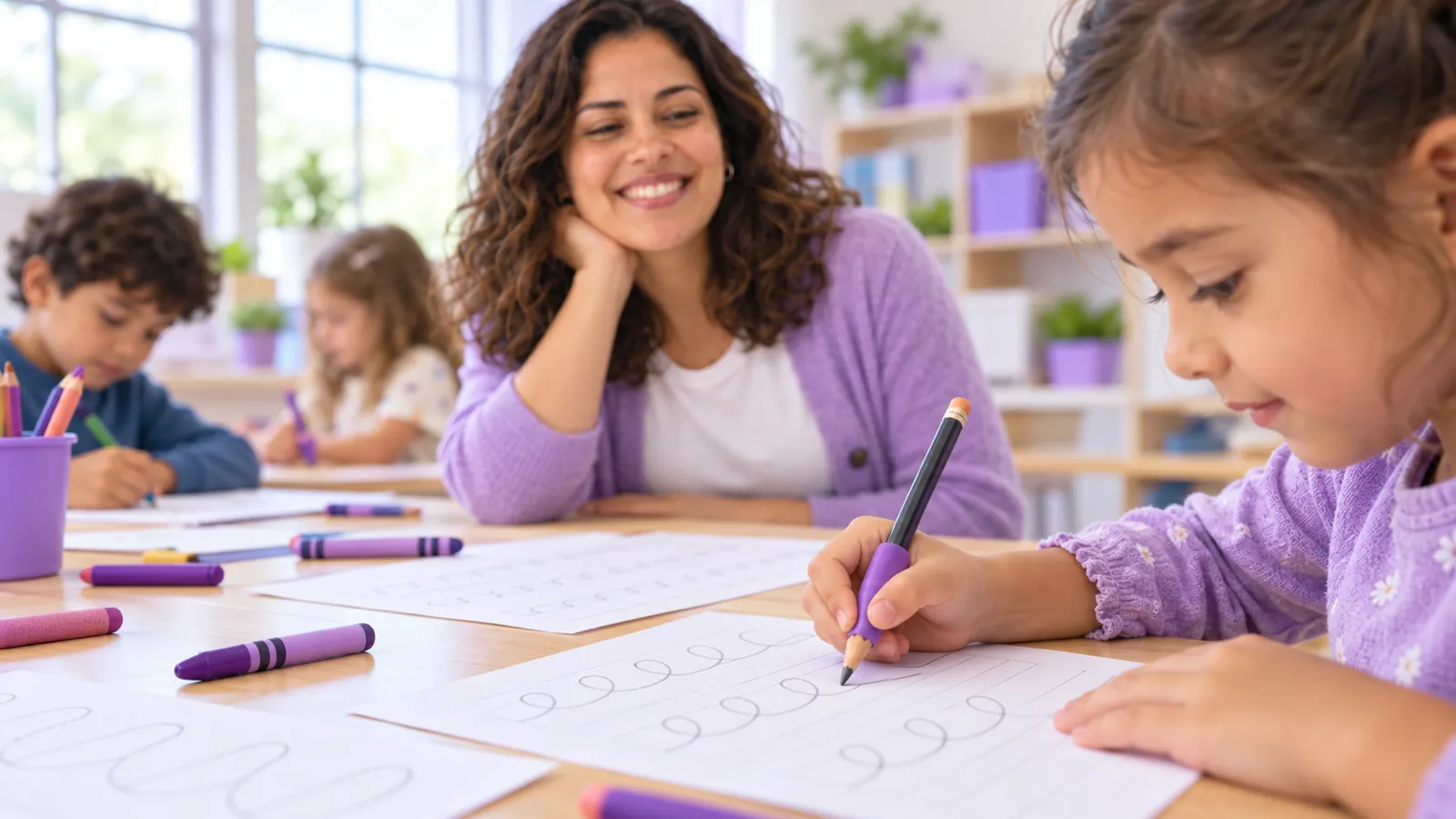
End of Year Activities for Elementary: Ideas for the Last 2 Weeks of School
The best end of year activities keep routines in place while giving students a chance to reflect, celebrate and get ready for next year. Plan the last two weeks around one short daily focus: memory books, review games, letters to next year's class, a class awards ceremony built on strengths, an outdoor learning day and a final goodbye circle. Keep morning meeting, read-aloud and a short academic block every day, because predictable structure is what keeps behavior calm when the calendar is full of events.
In this article you will find
The best end of year activities for elementary students keep the daily routine in place while adding one short, meaningful focus each day: memory books, review games, letters to next year’s class, a strengths-based awards ceremony, an outdoor learning day and a goodbye circle. The last two weeks of school are full of field days, assemblies, testing make-ups and packing up the room. Students feel the change and often get restless. A simple plan that mixes reflection, light review and celebration gives the year a calm, positive ending. Below is a ready-to-use 10-day plan, the activities that make it work and tips for keeping every student included.
Why structure matters more than ever in May and June
When the schedule fills up with special events, many teachers drop the routine “because it’s the end of the year.” That is usually when behavior slips. Students, especially those who find change hard, rely on knowing what comes next. Keep the anchors of your day: the morning meeting, a read-aloud, a short math or reading block and a closing circle. Then plug one special activity into the same time slot each day so it becomes part of the routine.
Post a visual calendar of the last 10 days with field day, assemblies and the last day marked. Review it every morning. If you already run a strong opening routine, our list of morning meeting ideas has greetings and shares that fit the reflective mood of the final weeks.
A 10-day plan for the last two weeks
| Day | Focus | Main activity |
|---|---|---|
| 1 | Looking back | Start the memory book: cover and “my favorite day” page |
| 2 | Review | Task-card scavenger hunt around the room |
| 3 | Growth | “Then and now” writing or drawing |
| 4 | Review | Partner quiz trade on the year’s big skills |
| 5 | Kindness | Compliment chain or kind-notes circle |
| 6 | Looking ahead | Letters to next year’s class |
| 7 | Outdoor learning | Chalk math, nature scavenger hunt, measurement relay |
| 8 | Celebration | Strengths-based class awards |
| 9 | Clean-up as a job | Room reset with classroom jobs and a summer plan |
| 10 | Goodbye | Memory book signing and a goodbye circle |
Adjust the order around your school’s events. If field day falls on day 7, move the outdoor learning day so students don’t have two high-energy days in a row.
Reflection activities
Memory book. Build it one page a day instead of all at once. Good pages: my favorite day, something I learned in math, a book I loved, a friend I made, how I grew, and a page for autographs. Kindergarten and 1st grade students can draw with a sentence starter like “I can now…” while older students write a paragraph.
Then and now. Hand back an early writing sample or a self-portrait from the first week and have students make a new one next to it. Then they write or dictate one sentence about what changed. This is often the activity families remember most, because the growth is easy to see.
Class timeline. Give each table group one month of the school year. They list the events, units and funny moments they remember, then add them to a long paper timeline in the hallway. It’s a natural review of the year’s content and a good speaking and listening task.
Review that feels like a game
You don’t have to stop teaching. Students just need review that moves.
- Task-card scavenger hunt. Tape 20 cards with review questions around the room. Students walk with a clipboard and answer in any order. Mix skills: a word problem, a vowel team word, a main idea question, a map question.
- Partner quiz trade. Each student writes three questions about something they learned this year, with answers on the back. Partners quiz each other, then trade cards and find a new partner.
- Four corners review. Read a multiple-choice question and label the corners A to D. Students walk to their answer and one student from each corner explains their thinking.
- Teach the class. Small groups pick a skill they’re proud of and teach a three-minute mini-lesson with an example. This works best in 3rd to 5th grade.
If your class needs movement between longer tasks, slip in a few short brain breaks for the classroom to reset energy before the next activity.
Looking ahead
Letters to next year’s class. Students write to the students who will sit in their seats next fall. Give a simple frame: what you’ll learn, one tip for being successful, your favorite part of the year and something to look forward to. Read a few aloud and save them for the first week of next year.
Sentence starters for younger writers:
- “In this class you will learn to…”
- “My best advice is…”
- “Don’t worry about…”
- “The best part of the year was…”
Summer reading and goals plan. Students set one reading goal and one fun learning goal for summer, such as “read 10 books” or “learn to tell time on a clock.” Keep it optional and free: list library programs and books students can borrow, and never require purchases.
Visit the next grade. If your school allows it, arrange a short visit to a classroom in the next grade, or invite older students to answer questions. Anxious students benefit most from seeing the room and hearing what a day looks like.
Celebration that includes everyone
Strengths-based awards. Give every student an award tied to a real strength you observed, not a joke or a ranking. Examples: “Most Thoughtful Question Asker,” “Kindest Teammate,” “Persistent Problem Solver,” “Creative Storyteller,” “Calm Helper.” Write one sentence on each certificate that names a specific moment. For a student who struggled behaviorally, choose a genuine strength and a real example.
Compliment chain. Each student writes a compliment for a classmate on a paper strip (assign names so no one is left out). Link the strips into a chain that hangs across the room on the last days.
Outdoor learning day. Take the lessons outside: chalk number lines and arrays, measuring shadows at different times, a nature scavenger hunt with adjectives, reading under a tree. Students get the freedom they want, and you still get learning.
Keeping the room calm while you pack up
Packing up is easier when it’s a class job. Assign roles such as library sorter, marker tester, desk cleaner and label remover, and give each a checklist. Send home student work gradually over the last two weeks instead of in one heavy bag on the last day.
Plan a quiet option for every loud event. Some students find assemblies, field day and parties overwhelming. A calm corner, headphones or a helper job during the event gives them a way to take part without a meltdown. Preview each event the day before with what will happen, how long it lasts and where they can go if they need a break.
Ideas by grade band
Kindergarten and 1st grade. Keep each activity to 15 or 20 minutes. Favorites: a class memory mural, “I can” celebration where students show a skill (counting to 100, writing their name, reading a sight word list), a bubble and chalk day and a goodbye song.
2nd and 3rd grade. Add writing: memory book paragraphs, letters to next year’s class, a class time capsule list and a simple review quiz show run by students.
4th and 5th grade. Give more ownership: student-run review stations, a “lessons I learned” speech in the goodbye circle, advice videos or posters for incoming students and, for 5th graders, a reflective letter to their future middle school self.
Wrapping up the last day
On the last day, keep it simple. Sign memory books, hand out awards if you haven’t already, and end with a goodbye circle where each student shares one sentence: “Something I’ll remember from this year is…” Close with your own sentence about what you’re proud of. Many students also need some quiet time to process the change, so build in a calm read-aloud before dismissal.
As you finish the year, you’ll also be writing final comments for families. Our guide to end of year report card comments has examples for every grade from K to 5.
Planning the last weeks faster
Writing ten days of plans when you’re also finishing grades and packing up is a lot. An AI lesson plan tool can draft a review game or an outdoor math lesson from a short description, and you adjust the details for your class.
The end of the year is just one stop on the school calendar. For activities tied to every season and holiday from August to June, browse our school calendar 2026-27 guide.
FAQ
What should I do with students during the last week of school?
Keep your normal schedule as much as you can and add one special activity a day: a memory book page, a review game, a letter to next year's class, a strengths-based awards ceremony or a goodbye circle. Students behave better when the day still feels familiar.
How do I keep teaching in the last two weeks of school?
Use review that feels like a game, such as task-card scavenger hunts, partner quiz trades and math stations, and save new content for short, low-stakes lessons. Reading aloud every day also keeps learning going.
What are good end of year activities for kindergarten?
Short, hands-on activities work best: a 'then and now' drawing of themselves, a class memory mural, a bubble or chalk day outside, a simple 'I can' celebration of skills they learned and a goodbye song in the final circle.
How can I make the end of the year inclusive for every student?
Give every student an award tied to a real strength, offer a quiet option during loud events, preview schedule changes with a visual calendar and avoid activities that require purchases from home.
Read next
Holidays
Black History Month Activities for Elementary Students (K–5 Ideas)
 Holidays
Christmas Activities for School: K–5 Classroom Ideas (with Inclusive Alternatives)
Holidays
Earth Day Activities for Students: K–5 Lessons, Not Just Crafts
Holidays
Gingerbread Man Activities for Kindergarten and 1st Grade (Literacy, Math, STEM)