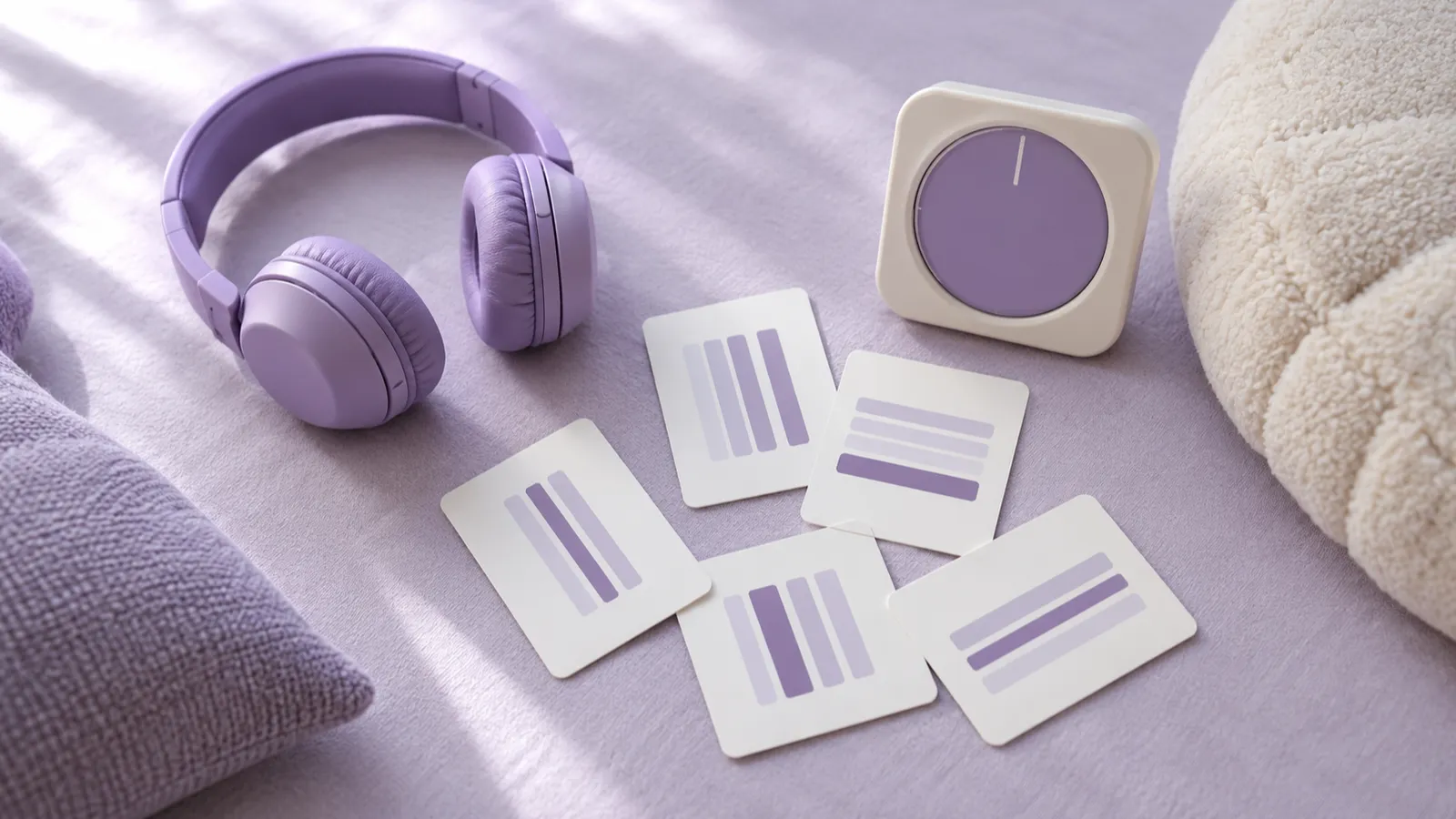
IEP Goals for Students with Autism (Communication, Social, Self-Regulation)
IEP goals for autistic students come from that student's present levels, not from the diagnosis. Common areas are functional communication, social interaction, self-regulation, flexibility with change, and independence. Write goals that build useful skills and self-advocacy rather than requiring the student to look or act neurotypical. The IEP team, including the family and related-service providers, decides.
In this article you will find
IEP goals for autistic students should grow out of that student’s own present levels, usually in functional communication, social interaction, self-regulation, flexibility and independence, and should build useful skills rather than asking the student to appear neurotypical. Autism looks different in every student. One child may need a goal for requesting a break with a picture card; another, reading fluently above grade level, may need a goal for joining group work. Below are sample goals by area that you can adapt with your team, plus tips for writing them respectfully and measurably.
Start from strengths and needs, not the label
The diagnosis doesn’t decide the goals; the data does. Look at the present levels for:
- How the student communicates now (speech, signs, pictures, a device, gestures).
- What situations lead to distress, and what helps.
- Strong interests and strengths you can build on.
- Sensory needs that affect participation.
- What the family and, when possible, the student want to work on.
Then ask a simple question for each possible goal: will this skill make the student’s life easier, safer, or more independent? If a goal mostly makes adults more comfortable, rethink it.
Functional communication goals
Communication is often the highest-impact area, because many challenging behaviors are a way to communicate a need.
- Using a picture card, sign, device or words, the student will request a preferred item or activity in 8 of 10 opportunities across 3 settings.
- When given a non-preferred task, the student will request a break using a break card or the phrase “break, please” in 4 of 5 opportunities, instead of leaving the area.
- When needing help, the student will request it using a taught phrase or symbol (“help, please”) in 4 of 5 observed opportunities.
- When offered an item or activity they don’t want, the student will refuse appropriately using “no, thank you” (spoken, signed or on a device) in 8 of 10 opportunities.
- When asked a “wh” question about a familiar activity, the student will answer with a relevant 2–3 word response in 4 of 5 trials.
- Using an AAC device, the student will combine two symbols to make a request or comment (“want ball,” “more music”) in 8 of 10 opportunities.
Write these goals with the speech-language pathologist so the communication system matches what the student uses.
Social interaction goals
Social goals should help the student connect in ways that are meaningful to them, not perform scripted social behavior.
- During a structured game with a peer, the student will take turns for at least 4 exchanges with no more than 1 adult prompt in 4 of 5 sessions.
- During recess, the student will join a peer activity by using a taught phrase (“Can I play?”) or by approaching and watching, then participating, in 3 of 5 observed recesses.
- During a conversation on a topic of interest, the student will respond to a peer’s question or comment at least 2 times in 4 of 5 conversations.
- During group work, the student will contribute one idea or complete one assigned role in 4 of 5 group sessions.
- When a peer greets them, the student will respond with a greeting (word, wave, sign or device) in 8 of 10 opportunities.
A note on eye contact: many teams no longer write eye contact goals. Looking at someone’s face can be uncomfortable for autistic students and isn’t necessary for listening. If attention is the concern, target the skill itself: “will orient body toward the speaker” or “will respond to their name within 5 seconds.”
Self-regulation and emotional awareness goals
- Using a visual feelings scale, the student will identify their current feeling or energy level in 4 of 5 daily check-ins.
- When showing early signs of distress (as identified in the BIP), the student will use a taught regulation strategy (deep breathing, headphones, a movement break) with no more than 1 prompt in 4 of 5 observed opportunities.
- After using a calm-down area, the student will return to the class activity within 5 minutes in 80% of opportunities across 4 weeks.
- The student will use a sensory tool (fidget, noise-reducing headphones, wobble cushion) during whole-group instruction and remain in the group for 15 minutes in 4 of 5 lessons.
If behavior is a major concern, the team may complete an FBA and write a behavior plan; see our guide to FBA vs BIP and our behavior IEP goals.
Flexibility and transitions
Changes in routine can be stressful. Goals here build predictable ways to handle change.
- When shown a “change” card on the visual schedule, the student will accept the change and move to the new activity within 2 minutes in 4 of 5 opportunities.
- Given a 2-minute warning and a visual timer, the student will transition from a preferred to a non-preferred activity with no more than 1 prompt in 4 of 5 transitions.
- When a preferred activity ends, the student will use a “first-then” board to move to the next task in 8 of 10 opportunities.
- When an unexpected event happens (fire drill, substitute), the student will use a taught coping statement or strategy in 3 of 4 observed events.
Independence and executive functioning
- Using a visual schedule, the student will move independently between at least 5 daily activities in 4 of 5 days.
- Given a picture task analysis, the student will complete a 5-step routine (unpacking, hanging the backpack, turning in folders) independently in 4 of 5 mornings.
- Given an independent work system (tasks left to right, finished bin), the student will complete 3 tasks with no adult prompts in 4 of 5 sessions.
- The student will request a needed accommodation (headphones, a break, a quiet space) without prompting in 3 of 4 opportunities. (A self-advocacy goal.)
Academic goals for autistic students
Many autistic students need academic goals too, especially for reading comprehension (inferring characters’ thoughts and feelings) or written expression. Those goals follow the same structure as for any student; see our IEP goals for reading comprehension.
Measuring progress
- Use the same setting and type of opportunity each time.
- Note the level of prompting (independent, gestural, verbal, physical). Fading prompts is often the real progress.
- Collect data across settings (classroom, specials, lunch) if the goal names more than one.
- Graph weekly and share examples with the family.
Privacy and AI drafting
If you use an AI tool to draft goals, describe skills and supports in general terms. Never include names, diagnoses tied to identifying details, or descriptions that could identify a student. The draft is a start; the team, including the family and related-service providers, decides.
For the goal formula and examples in every area, see how to write IEP goals and the IEP goal bank.
FAQ
What are common IEP goals for students with autism?
Common areas include functional communication (requesting, refusing, asking for help), social interaction (joining play, turn-taking, conversation), self-regulation (recognizing feelings, using calming strategies), flexibility (handling changes in routine), and independence (following a visual schedule, completing tasks). The specific goals depend on each student's present levels.
Should autism IEP goals focus on eye contact?
Many educators and autistic self-advocates now avoid eye contact goals because eye contact can be uncomfortable and isn't required for listening or learning. Goals that target the underlying skill, like showing attention by orienting toward the speaker or responding to a question, are usually more meaningful.
Who writes the communication goals for an autistic student?
Communication goals are often written with the speech-language pathologist, and sensory or motor goals with the occupational therapist. The special education teacher coordinates, and the whole IEP team, including the family, agrees on the final goals.
Read next
 Special Education
IEP Goals for ADHD: Attention, Impulsivity and Work Completion Examples
 Special Education
Preschool IEP Goals: Social, Communication, Adaptive and Pre-Academic Examples
Special Education
IEP Goals for Sight Words: 15 Examples and How to Measure Them
 Special Education
Functional IEP Goals for Students with Severe and Profound Disabilities
Special Education
Autism Strategies in the Classroom: 30 Teaching Strategies for Gen Ed and SPED
 Special Education
Visual Schedules for Autism: How to Make and Use One in the Classroom