IEP Accommodations for Autism: Elementary to High School
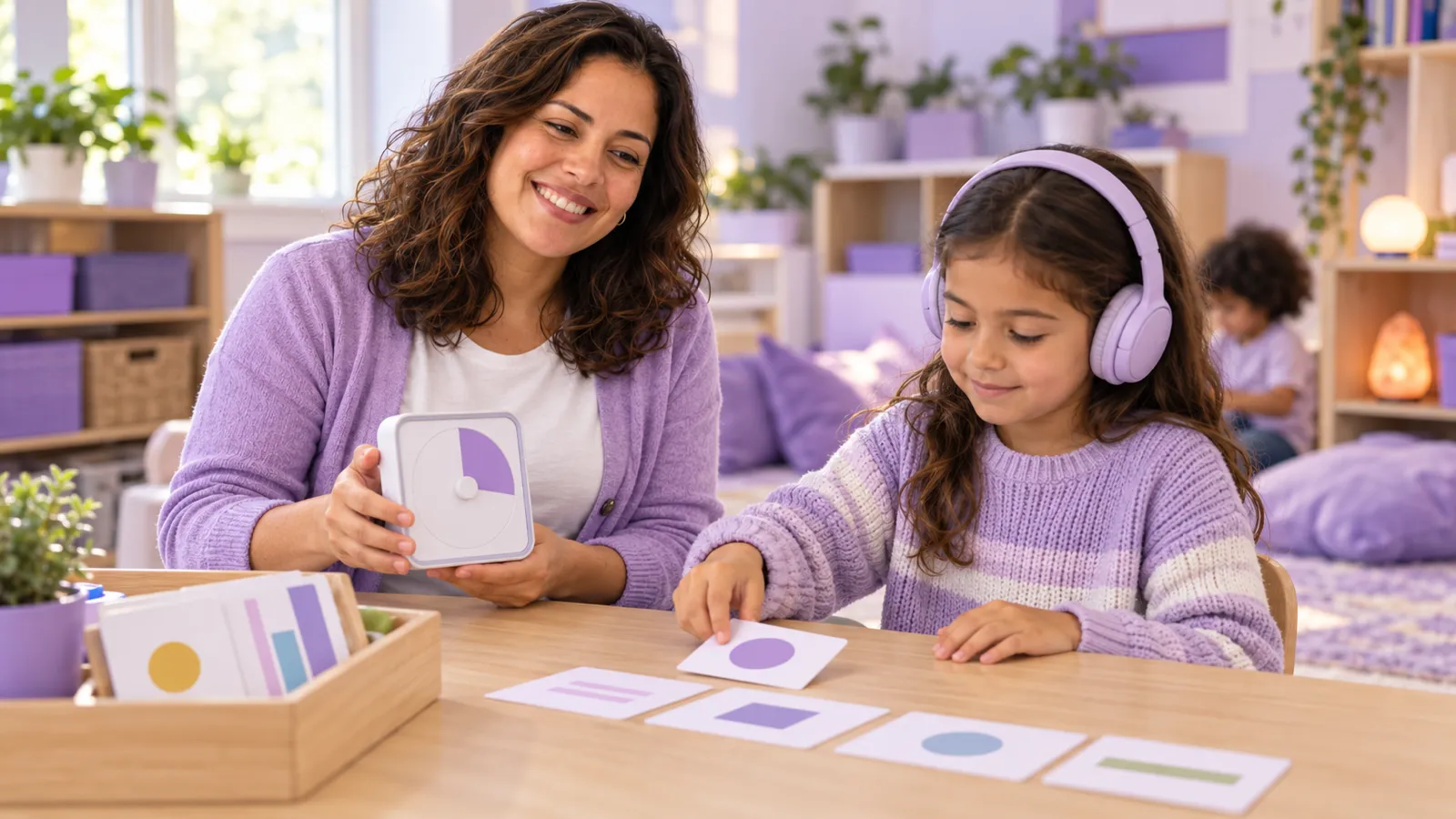
Accommodations for autistic students change how they access learning without lowering expectations. The most common fall into six areas: sensory (noise-reducing headphones, a quiet space), communication (visual supports, processing time), transitions (warnings, visual schedules), social (structured group roles), executive functioning (checklists, chunked tasks) and testing (separate setting, breaks). Choose them from the student's needs, not the diagnosis, and adjust them as the student grows.
In this article you will find
IEP accommodations for autistic students change how they access learning without lowering expectations, and most fall into six areas: sensory, communication, transitions, social interaction, executive functioning and testing. The right list comes from the student’s needs and data, not from the diagnosis. Two autistic students in the same class may need completely different supports. Below you’ll find accommodations by area, examples by grade band, and tips for making them work day to day.
Accommodations vs modifications
- Accommodation: changes how a student learns or shows learning (a visual schedule, a quiet testing room). The standard stays the same.
- Modification: changes what the student learns (fewer standards, alternate content).
Most autistic students who access the general curriculum need accommodations, not modifications. For a deeper explanation, see accommodations vs modifications.
Accommodations by area
Sensory
| Need | Accommodation | Classroom example |
|---|---|---|
| Sensitive to noise | Noise-reducing headphones | Available during independent work, assemblies and the cafeteria |
| Overwhelmed by busy spaces | Access to a quiet area | A calm corner or nearby room with a timer |
| Needs movement | Movement breaks | A 2-minute walk or errand every 30 minutes |
| Sensitive to light | Seating away from bright windows or flickering lights | Desk placement in a calmer area |
| Needs to fidget | Fidget tools | A quiet fidget agreed upon with the student |
| Crowded hallways | Early or late passing | Leave class 2 minutes early |
Communication
- Extra processing time before responding (wait 5–10 seconds)
- Directions given in writing and orally
- Visual supports: picture cards, choice boards, labeled diagrams
- Access to augmentative and alternative communication (AAC) if the student uses it
- Literal language; explain idioms and sarcasm
- Option to respond in writing, by pointing or typing instead of speaking
Transitions and routines
- Visual schedule for the day, reviewed each morning
- Verbal and visual warnings before transitions (5 minutes, 2 minutes)
- Advance notice of schedule changes, substitutes, fire drills when possible
- First-then boards (“First math, then break”)
- Transition objects or jobs (carry the attendance folder)
- Consistent seating and routines
Social interaction
- Assigned roles in group work (timekeeper, recorder)
- Choice of working alone or with a partner for some tasks
- Structured recess or lunch options (a club, a game group)
- Peer buddy for unstructured times
- Social narratives that preview new situations
Accommodations give access; teaching social skills usually belongs in IEP goals and specially designed instruction. See our IEP goals for autism for examples.
Executive functioning and work completion
- Chunked assignments with one section visible at a time
- Visual checklist of steps
- Timer showing how much time remains
- Reduced copying from the board (provide notes)
- Organizer or template for writing
- Check-in at the beginning and end of tasks
Testing
- Separate, quiet setting
- Extended time
- Frequent breaks
- Directions read aloud or clarified
- Familiar test administrator when possible
- Answers marked in the test booklet
For a full list of what’s typically allowed on state tests, see our testing accommodations list.
Examples by grade band
Elementary (K–5)
- Picture schedule taped to the desk
- First-then board for nonpreferred tasks
- Calm-down area with visual steps
- Advance warning before specials and recess
- Headphones during assemblies
- Choice of seat on the carpet (end of the row, a cushion)
Middle school (6–8)
- Copy of the daily agenda for each class
- Passing time before the bell
- Planner check with the case manager
- Clear written rubrics for projects
- Designated adult to go to when overwhelmed
- Preferential seating in each class, agreed upon with the student
High school (9–12)
- Student-managed digital schedule and reminders
- Notes or slides provided before class
- Alternatives to oral presentations, such as recording or presenting to the teacher only
- Self-advocacy practice: student requests accommodations from each teacher
- Quiet space for lunch or study
- Transition planning supports tied to the IEP’s postsecondary goals
Making accommodations work in a real classroom
- Write them clearly. “Breaks as needed” is vague. “Up to 3 five-minute breaks per day, requested with a break card” is clear.
- Tell every adult. Specials teachers, substitutes, lunch and bus staff need to know what applies to them.
- Teach the student to use them. A break card helps only if the student knows when and how to use it.
- Avoid singling out. Offer some supports, like headphones or checklists, to the whole class.
- Track use. If the student never uses an accommodation, ask why. If it’s used constantly, the need may be bigger.
- Review and fade. Shift from adult-managed to student-managed supports.
Example: turning needs into accommodations
Here’s how a team might move from present levels to a clear list for a 4th grade autistic student.
What the data shows:
- Covers ears and leaves the cafeteria within 5 minutes on most days.
- Becomes upset during unannounced schedule changes (3 incidents in the last month).
- Completes about half of multi-step math tasks; often stops after step 2.
- Answers questions accurately when given time, but rarely raises a hand in whole-group discussion.
Accommodations the team might consider:
| Need | Accommodation (written clearly) |
|---|---|
| Noise in the cafeteria | Option to eat lunch in a quieter space with a peer, or use noise-reducing headphones in the cafeteria |
| Unexpected changes | Written or picture notice of schedule changes at morning check-in; adult preview of drills when possible |
| Multi-step tasks | Visual checklist of steps for multi-step math problems; one section of the task shown at a time |
| Whole-group participation | Wait time of at least 5 seconds; option to answer on a whiteboard or share with a partner first |
Notice that each accommodation is specific: who does what, when. “Sensory supports as needed” would leave every adult guessing.
Accommodations vs teaching the skill
Accommodations should not replace instruction. A visual checklist gives access today, while an IEP goal can teach the student to make their own checklist next semester. A quiet lunch option reduces overload, while a social skills goal can build comfort with one or two peers in that quieter setting. Review the balance at every IEP meeting so supports grow with the student rather than staying the same for years.
Listen to the student and family
Autistic students and their families often know what helps and what overwhelms. Ask about sensory triggers, communication preferences and what has worked before. Many autistic self-advocates also stress respecting stimming, avoiding forced eye contact and focusing on access and comfort rather than making students look “typical.”
Preparing for the IEP meeting
Before the meeting, gather information that helps the team choose well:
- Which supports the student already uses informally, and how often
- Times and places where the student struggles most (cafeteria, transitions, group work)
- Work samples that show the impact of executive functioning or communication needs
- Input from specials teachers, paras and bus or lunch staff
- The student’s own preferences, through a short interview or a picture survey
Bringing this evidence keeps the conversation focused on what the student needs, rather than on a generic checklist.
Team decisions and privacy
Accommodations are decided by the IEP or 504 team based on the student’s data and needs, under IDEA, Section 504 and your district’s procedures. This article is general guidance, not legal advice. Keep IEP information in official systems, share only what each adult needs, and never enter a student’s name or identifying details into an AI tool.
For more on choosing between plans and what each provides, see our IEP vs 504 guide.
FAQ
What are common IEP accommodations for autism?
Common examples include visual schedules, advance notice of transitions, noise-reducing headphones, a quiet space for breaks, extra processing time, written directions, preferential seating, structured roles in group work, chunked assignments and testing in a separate setting. The team chooses based on each student's needs.
What is the difference between an accommodation and a modification for autism?
An accommodation changes how the student learns or shows learning, such as using a visual schedule or taking a test in a quiet room. A modification changes what the student is expected to learn, such as fewer standards or alternate content. Many autistic students need accommodations only.
Can an autistic student have a 504 Plan instead of an IEP?
Yes. If an autistic student needs accommodations to access general education but not specially designed instruction, a 504 Plan may fit. If the student needs specialized instruction, such as social communication or self-regulation teaching, an IEP is usually appropriate. The team decides.
Should accommodations change as students get older?
Yes. Accommodations should be reviewed at least yearly and shift toward independence and self-advocacy, especially in middle and high school. For example, a teacher-managed visual schedule may become a student-managed planner app.
Read next
 Special Education
Autism Strategies in the Classroom: 30 Teaching Strategies for Gen Ed and SPED
Special Education
Visual Schedules for Autism: How to Make and Use One in the Classroom
 Special Education
504 Plan vs IEP for ADHD: Which One Fits and What Each Includes
Special Education
Accommodations for Anxiety in the Classroom (and During State Tests)
Special Education
IEP Goals for Students with Autism (Communication, Social, Self-Regulation)
 Holidays
Christmas Activities for School: K–5 Classroom Ideas (with Inclusive Alternatives)