Kindergarten Math Centers: 25 Ideas by Skill (Counting, Shapes, Addition)
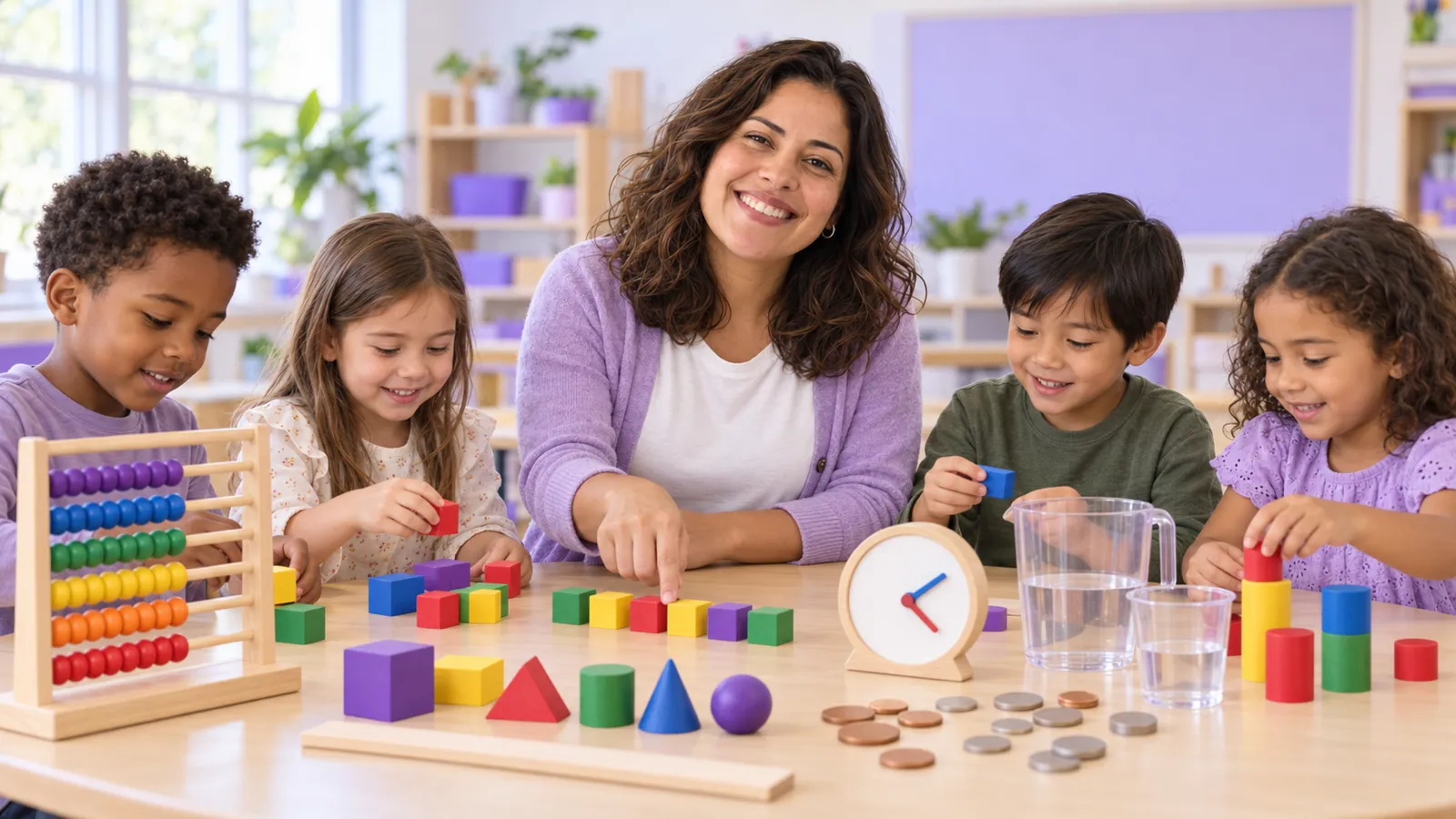
Kindergarten math centers work best when each one practices a single skill students already learned, uses hands-on materials and takes 10 to 15 minutes. Sort centers by skill: counting and cardinality (counting jars, ten frame fill), number recognition, comparing numbers, addition and subtraction within 10 (shake and spill, number bonds), shapes (shape hunts, pattern blocks) and measurement (longer or shorter, heavier or lighter). Teach each center in a whole-group lesson first, keep the same routines all year and change only the content.
In this article you will find
- What makes a kindergarten math center work
- Counting and cardinality
- Number recognition and writing
- Comparing numbers
- Addition and subtraction within 10
- Shapes and geometry
- Measurement and data
- Making centers easier or harder
- Setting up a rotation
- The first month of centers
- Checking learning at centers
- Supporting all learners
- Prep in less time
The best kindergarten math centers practice one skill students have already learned, use hands-on materials, last 10 to 15 minutes and follow routines students know by heart; sort them by skill so you always have options for counting, number recognition, comparing, addition and subtraction, shapes and measurement. Centers let kindergartners practice independently while you teach a small group, but only if each one is clear, short and familiar. Below are 25 center ideas organized by skill, with materials and a quick way to make each one easier or harder. If you’re still deciding how to structure rotations, our guide to learning centers covers the basics, from grouping to management.
What makes a kindergarten math center work
One skill per center. “Counting to 20” is a center. “Math” is not. A narrow focus lets students succeed on their own.
Practice, not new learning. Every center should practice something you’ve already taught in a whole-group or small-group lesson.
Hands-on first. Counters, ten frames, dice, playdough, pattern blocks and linking cubes do more for 5-year-olds than worksheets. A simple recording sheet can follow the hands-on part.
Same routine, new content. Once students know how to play “roll and cover,” you can change the numbers or the theme all year without reteaching the rules.
Clear finish. Students need to know when they’re done and what to do next, such as “check your work with a partner” or “play again.”
Counting and cardinality
1. Counting jars. Small jars with 5 to 20 objects. Students count each jar and record the number. Change the objects weekly.
2. Ten frame fill. Students roll a die and fill a ten frame with that many counters. When the frame is full, they say “ten!” and start a new one. It builds subitizing and the idea of ten.
3. Count and clip. Cards with a set of pictures and three numbers along the edge. Students count and clip a clothespin on the correct number. Great for fine motor skills too.
4. Playdough mats. Students make the number of playdough balls shown on a mat (for example, 7 apples on a tree). Ask them to point and count.
5. Count the room. Students walk around with a clipboard, find posted pictures (4 stars, 9 hearts), count and write the number.
Number recognition and writing
6. Number puzzles. Two-piece puzzles: one half shows a numeral, the other a set of dots or a ten frame. Students match them.
7. Sand or salt tray writing. Students draw a number card and trace the number in a tray of sand with their finger, then write it on a whiteboard.
8. Number hunt. Students look for a target number in magazines, calendars or a number search page and circle it.
9. Missing number trains. Linking cube trains with number cards 1 to 20, with some cards missing. Students fill in the missing numbers in order.
Comparing numbers
10. More or less spin. Students spin two spinners, build each number with cubes and decide which tower is taller. They say: “7 is more than 4.”
11. Dot card war. Two players flip dot cards; the one with more dots keeps both. If they tie, they flip again. Use numbers to 10.
12. Greater, less, same sort. Pairs of picture cards go into three piles. It’s a quiet center that works well for independent practice.
Addition and subtraction within 10
13. Shake and spill. Put a set number of two-color counters (for example, 6) in a cup. Students shake and spill, then record how many red and yellow: 4 and 2 make 6. It shows all the ways to make a number.
14. Number bond mats. Students split a set of counters between two circles and record the parts and the whole.
15. Bunny hop addition. On a number path from 0 to 10, students roll two dice (1 to 3 on each), start at the first number and hop forward the second, then write the addition sentence.
16. Bowling subtraction. Set up 10 plastic pins or cups. Students roll a ball, count how many fell and how many are standing, and record: 10 − 3 = 7.
17. Make ten match. Students play memory with cards from 0 to 10, matching pairs that make ten (3 and 7, 6 and 4).
18. Story mats. A farm or pond mat with animal counters. Students act out addition and subtraction stories you’ve modeled: “3 ducks were swimming. 2 more came. How many now?”
Shapes and geometry
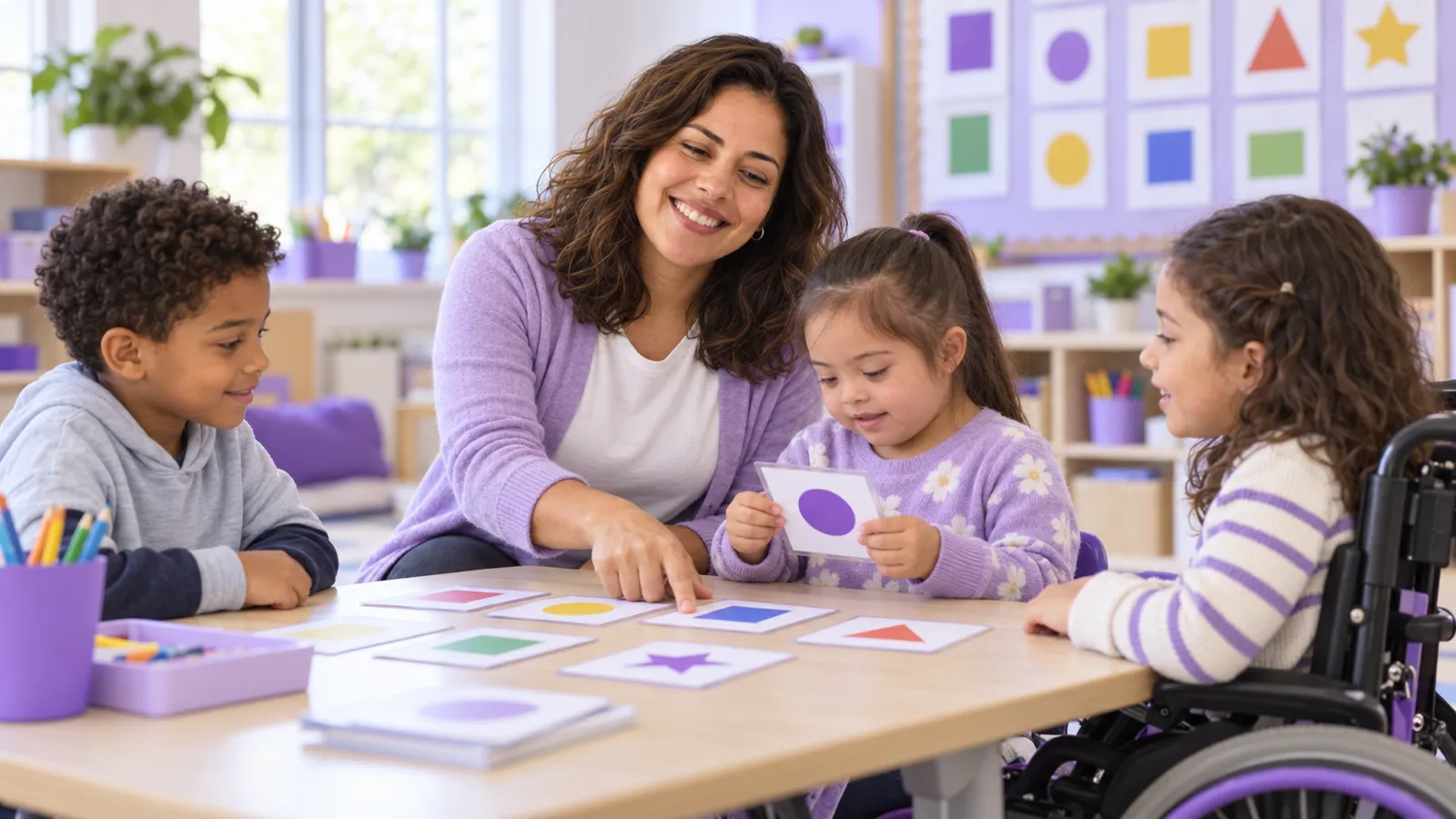
19. Shape hunt. Students walk around the room with a recording sheet and find objects shaped like circles, squares, triangles, rectangles, cubes, cones and cylinders.
20. Pattern block pictures. Students fill outline pictures with pattern blocks, then count how many of each shape they used.
21. Build a shape. Students make 2D shapes with craft sticks or playdough snakes and count the sides and corners.
22. Shape sort. Mixed shape cards in different sizes, colors and orientations. Students sort by shape, not by color or size. Include upside-down triangles and long thin rectangles so students learn that orientation doesn’t change the shape.
Measurement and data
23. Longer or shorter. Students compare classroom objects to a pencil or a cube train and sort them into “longer” and “shorter.”
24. Heavier or lighter. With a simple balance scale, students compare two objects and record which is heavier.
25. Sort and graph. Students sort a bag of buttons, toy animals or colored cubes and make a simple picture graph, then answer: “Which group has the most?”
Making centers easier or harder
| Center | Easier | Harder |
|---|---|---|
| Counting jars | 1 to 10 objects | 11 to 20 objects, or estimate first |
| Ten frame fill | One die, numbers 1 to 3 | Two ten frames, record the total |
| Shake and spill | 5 counters | 10 counters, write the equation |
| Make ten match | Ten frames on the cards | Numbers only |
| Shape hunt | 2D shapes only | Include 3D shapes |
Setting up a rotation
Many kindergarten teachers run four centers with three to five students each and one small group with the teacher, rotating every 10 to 15 minutes. A visual rotation board with student pictures helps children know where to go. Use a consistent signal for cleanup and transitions, and teach each center in whole group before it becomes independent. Our post on learning stations vs centers explains how to choose between free-choice centers and fixed rotations.
The first month of centers
Don’t launch all 25 ideas at once. In the first weeks of school, start with one or two centers that use materials students already know, such as counting jars and playdough mats, while the rest of the class works at tables with simple tubs of linking cubes. Practice the routine itself: how to walk to a center, how to share materials, what to do when you finish and how to clean up in two minutes. Add a new center each week only after the class handles the current ones well. By October, most kindergarten classes can rotate through four centers independently.
Checking learning at centers
Centers are practice, but you still need to know what students are learning. Short recording sheets, a quick photo of a student’s work or a two-minute check with you are enough. Watch for students who rush, guess or copy, and pull them into your small group. For a broader look at what to check during the year, our kindergarten assessment checklist lists the main math skills to track.
Supporting all learners
Some students need fewer materials at a time, a visual task card with pictures or a partner. Follow the accommodations in IEPs or 504 plans as their team decided. For English learners, model the math language at each center with sentence frames (“I have ___. ___ is more than ___.”) and pair them with a strong speaking partner.
Prep in less time
Recording sheets, task cards and number puzzles for each skill take time to make. An AI worksheet tool can draft a recording sheet or a set of matching cards for the numbers your students are working on, and you check them before printing.
Math centers are one part of a classroom where students practice independently while you teach. For rotation schedules, management tips and center ideas in other subjects, visit our guide to learning centers.
FAQ
How many math centers should a kindergarten class have?
Four to six centers is common, with three to five students at each. Many teachers run two or three rotations a day for 10 to 15 minutes each, with one rotation being a small group with the teacher.
What skills should kindergarten math centers practice?
Counting and cardinality, number recognition and writing, comparing numbers, addition and subtraction within 10, composing and decomposing numbers, 2D and 3D shapes, and simple measurement and data, following your state's kindergarten standards.
How do you introduce math centers in kindergarten?
Teach one center at a time in a whole-group lesson, model the routine, practice cleanup and launch just one or two centers in the first weeks. Add more as students show they can work independently.
Read next
 Teaching
Learning Stations vs Centers: The Difference, Rotation Schedules and Examples
 Literacy
 Centers for 1st Grade: 20 Ideas Aligned with the Science of Reading
 Holidays
Gingerbread Man Activities for Kindergarten and 1st Grade (Literacy, Math, STEM)
 Special Education
Kindergarten IEP Goals: Reading, Math, Writing and Behavior Examples