Social Stories and Visual Supports for Autistic Students: A Guide for Australian Primary Teachers

TL;DR
A social story is a short, personalised text, often with pictures, that describes a situation, what usually happens and why, so an autistic student can understand and prepare for it. The approach was developed by Carol Gray, whose Social Stories™ follow specific criteria; teachers can learn from her published guidance. Use stories alongside visual timetables, first–then boards and routine cards, write them in a patient, descriptive tone rather than as rules, involve the student and family, and treat them as one reasonable adjustment among many.
A social story is a short, personalised text, usually with pictures, that describes a situation, what typically happens, who is involved and why, so an autistic student can understand what to expect. The approach was developed by Carol Gray, whose Social Stories™ follow published criteria. In an Australian primary classroom, social stories work best alongside visual timetables, first–then boards and routine cards, written in a patient, descriptive tone and developed with the student and their family as part of their reasonable adjustments. This guide explains how to write a respectful story, which visual supports to use, how they fit with your school’s planning and the mistakes to avoid.
Start with the student, not the strategy
Autistic students are individuals. Before choosing any support:
- Talk with the student and family about what helps, what is hard and what they want to work on. Many autistic people and advocates prefer identity-first language (“autistic student”); ask the family and student what they prefer.
- Read the student’s plan and any advice from specialists such as speech pathologists or occupational therapists.
- Look for the reason behind behaviour. Distress is often a response to uncertainty, sensory overload or communication difficulty.
- Build on strengths and interests. A story featuring a favourite topic may be more engaging.
The aim is understanding and wellbeing, not making a student look or act less autistic. A neurodiversity-affirming approach respects stimming, different ways of communicating and the need for downtime.
What a social story is
Carol Gray developed Social Stories™ in the early 1990s. Her published criteria describe stories that share accurate information in a patient and reassuring way, are written for a specific person and situation, and are mostly descriptive rather than directive. Teachers who want to follow the approach closely should use her books and official resources; this article gives general guidance rather than certification.
In practice, a classroom social story usually:
- has a clear title that names the situation (“Going to the school swimming carnival”);
- is written for one student, at their reading level and with their vocabulary;
- describes where, when, who, what happens and why;
- includes other people’s perspectives in simple terms;
- gently suggests what the student might do, without demanding;
- uses positive, literal language and avoids “always” and “never” when things may change;
- includes photos or simple pictures that match the real setting.
Example: a fire drill
Fire drills at school
Sometimes our school has a fire drill. A fire drill is practice for keeping everyone safe.
When there is a drill, an alarm makes a loud sound. Some people do not like the loud sound. I can wear my headphones or cover my ears.
My teacher will help our class walk outside to the oval. We line up with our class. My teacher counts everyone to make sure we are all safe.
After a while, the teacher tells us we can go back inside. Then we keep learning.
Fire drills help everyone at school know what to do.
Note the tone: it explains, offers a coping option and ends with reassurance.
Situations where stories help
| Situation | Why it can be hard |
|---|---|
| Starting a new year or class | New teacher, room and routines |
| Relief teacher days | Unexpected change to a familiar adult |
| Assemblies and fire or lockdown drills | Noise, crowds, unpredictability |
| School camps, excursions and incursions | New places, transport, changed timetable |
| Sport and swimming carnivals | Noise, heat, competition, waiting |
| NAPLAN or other tests | Different room, timing and rules |
| Lunch and recess | Unstructured time, games with unclear rules |
| Book Week parades and dress-up days | Costumes, changed appearance of familiar people |
Visual supports that work alongside stories
Visual timetable
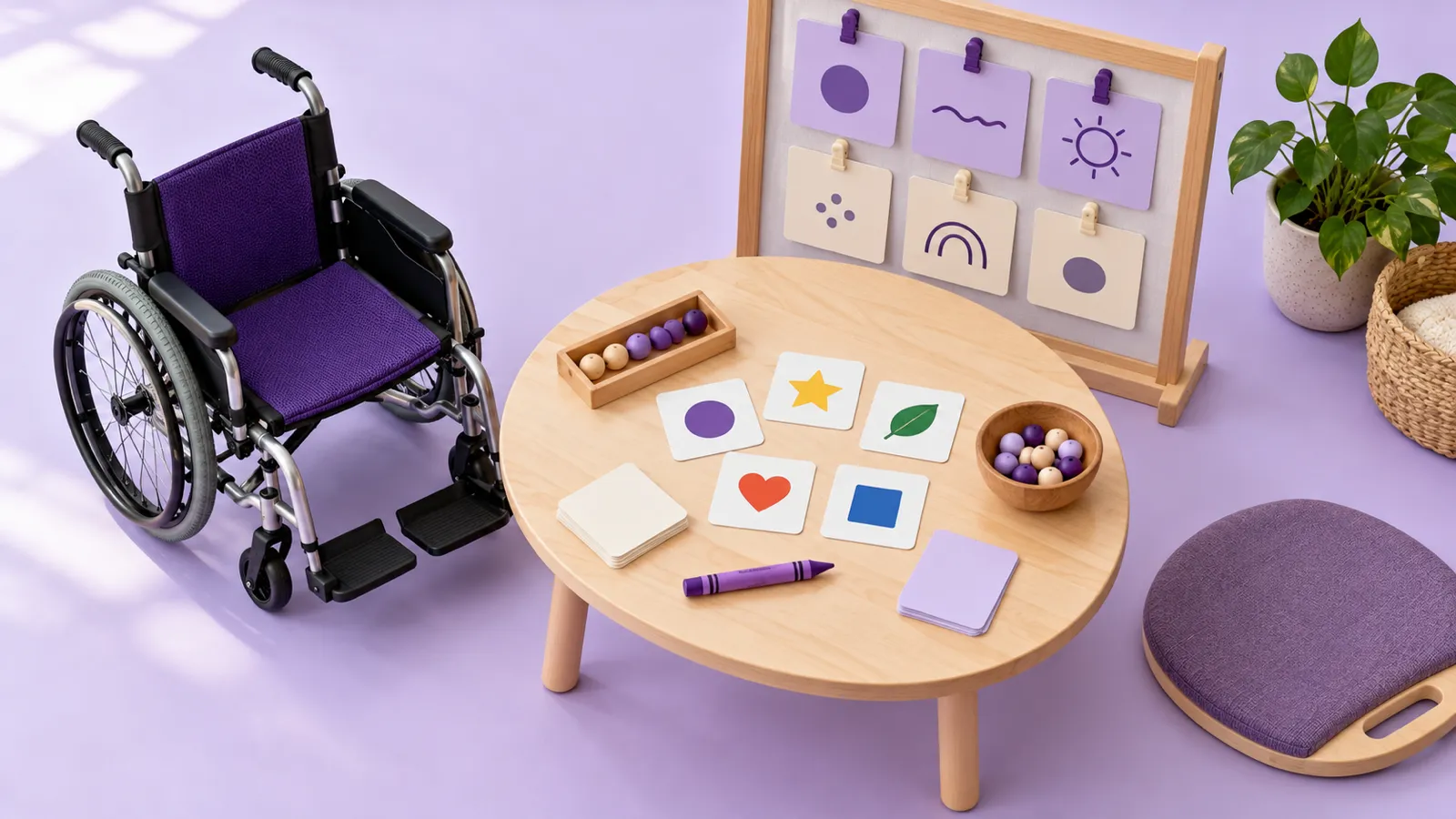
A sequence of picture cards showing the day: arrival, morning learning, recess, literacy, lunch, sport, home time. Remove or turn over each card when it is finished. Show changes, such as a relief teacher or an assembly, with a “change” card rather than surprising the student.
First–then board
Two boxes: first the task, then something motivating. It makes the next step concrete: “First maths, then iPad time.” Keep the “then” achievable and honour it.
Routine cards
Small cards showing the steps of a routine: unpacking a bag, going to the toilet, packing up. Useful for building independence.
Choice boards and break cards
A small set of options (draw, read, quiet corner) and a way to ask for a break without words. These reduce distress and give students agency.
Timers and countdowns
Visual timers show how long is left, which helps with transitions.
Fitting supports into your school’s planning
Visual supports and social stories are examples of reasonable adjustments under the Disability Standards for Education 2005. Schools consult with the student and family, make adjustments and review them. Record:
- which supports you use and when;
- how the student responds;
- what you will change at the next review.
These records feed into the student’s individual plan (names vary by state and sector) and into the school’s evidence for the Nationally Consistent Collection of Data. See our guide to individual learning plans in Australia.
Adapting learning activities
- Clear structure: a visible start, steps and finish for each task.
- Reduced language load: short instructions, written and visual.
- Matching and sorting tasks for students who are building early concepts.
- Interests as hooks: a maths task about trains or a writing prompt about a favourite animal.
- Sensory considerations: seating away from noise, headphones, lighting, movement breaks.
- Predictable group work: assigned roles and partners rather than “find a group”.
Common mistakes
- Writing a story as a set of rules or a behaviour warning.
- Generic stories that do not match the student’s real school, people or routines.
- Reading the story only when the student is already distressed. Read it at a calm time beforehand.
- Promising things that may change, such as the exact time of an event.
- Visual timetables that are not kept up to date or are removed once the student “seems fine”.
- Leaving out the student’s and family’s voice.
- Aiming to stop harmless stimming instead of supporting regulation and learning.
- Calling something a Social Story™ when it does not follow Carol Gray’s criteria.
Getting started
Pick one situation coming up this term, write a short story with real photos from your school and read it with the student a few times before the day. Starting a new year? See our back-to-school ideas for Term 1. The Pluma AI tools can help you draft a first version of a story or a visual routine, which you then personalise, check for tone and review with the student’s family.
FAQ
What is the difference between a social story and a set of rules?
A social story mainly describes: what happens, who is involved, why, and how people might think or feel. It shares information respectfully and may suggest what the student could try. A list of rules tells a student what to do and can feel like a reprimand.
Do I need training to write social stories?
Teachers can write simple descriptive stories, but Carol Gray's Social Stories™ follow defined criteria, and her books and official resources explain them. If you call something a Social Story™, it should follow those criteria; otherwise describe it as a social narrative or visual story.
How often should I read a social story with a student?
Before the situation, at a calm time, and as often as is useful, for example daily during the week before a school camp or excursion. Some students like to keep a copy to reread; others need it less once the situation is familiar.
Are visual supports only for students who do not speak?
No. Many autistic students who speak fluently still process visual information more easily, especially when they are anxious or tired. Visual timetables and first–then boards help many students, autistic or not.
Read next
 Inclusion
Dyscalculia and Dysgraphia in the Australian Classroom: Signs, Supports and Reasonable Adjustments
 Inclusion
Dyslexia Strategies for Australian Classrooms: Explicit Teaching, Adjustments and Adapted Activities
Inclusion
Individual Learning Plans in Australia: IEPs, ILPs and Reasonable Adjustments Explained for Teachers
 Seasonal
Back to School in Australia: Term 1 Activities and Dates for the First Weeks of Primary